
The Aftermath and the Nurse Who Stayed
I was reminded during a recent interview with the Ohio News Network that we often focus our narratives on the moment of trauma, but we rarely talk about the aftermath. The aftermath is where things get blurry. It’s where people expect a clean resolution but encounter a complicated, lifelong process. It’s the part that doesn’t fit neatly into a 90-minute documentary or a keynote speech. That "in-between" space—the ongoing, unresolved part of survival—is where most of us actually live. But it’s the part that rarely gets the headline.
Sitting in the ballroom at the MOCSA luncheon, I realized that while the documentary exposed the systemic rot of institutional silence, the real work of healing often happens in the quiet, unrecorded moments between individuals. At that same event, I had the opportunity to reintroduce myself to Susan Kieger.
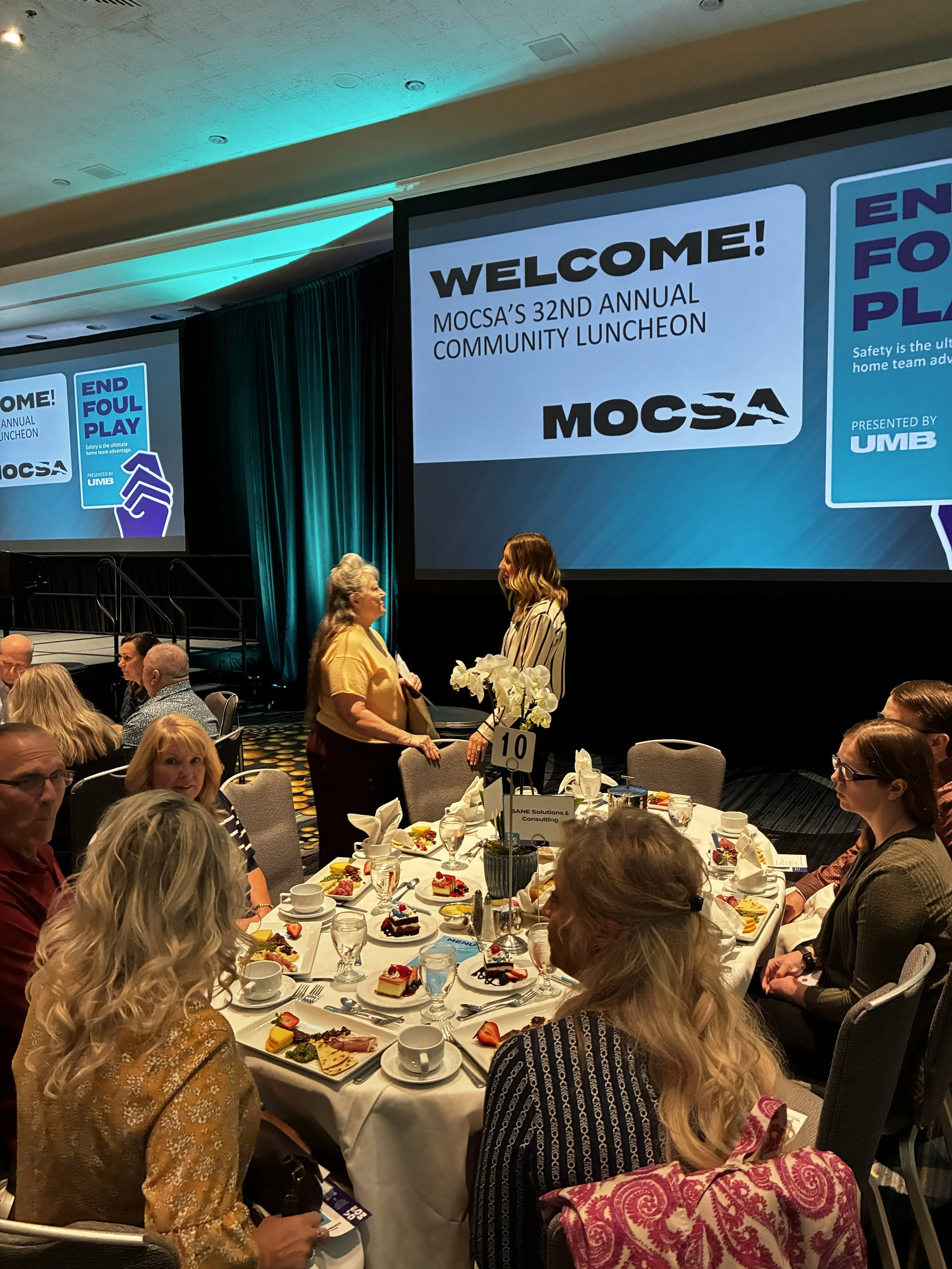
Susan was the SANE (Sexual Assault Nurse Examiner) nurse in my case. I was able to thank her, over 12 years later, for her kindness and compassion on that horrible day. For a survivor, the SANE exam is often one of the most clinical, vulnerable, and difficult parts of the immediate aftermath. Yet, Susan’s presence provided a buffer of humanity against a system that often feels cold.
A few months prior, I had been able to connect with her through her employer. I gifted her a copy of my book as a thank-you, both for her care and for her testimony, which was a vital part of the narrative of my journey. To connect with her again in person was to bridge the gap between that traumatic day and the person I have become since.
When we spoke at the luncheon, she shared something with me that brought the entire experience full circle: she told me she had pulled out my book a couple of months ago and read it for a second time because it gave her hope in a personal situation she was facing.
It was a profound moment of role reversal. The woman who stood by me in my darkest hour, performing a job that requires immense emotional fortitude, was now finding strength in the words I wrote to survive it. This is the part of the story that doesn't make it into the investigative reports. It is the evidence of a different kind of "documentary"—one written in the shared resilience of people who choose to lean in rather than look away.
Institutional betrayal, like what we saw with Dr. Strauss at Ohio State, is designed to make you feel small and invisible. It attempts to diminish harm and deny responsibility. But individual connection, the kind I shared with Susan, is the antidote to that silence. It reminds us that even when large systems choose silence over safety, there are individuals within those systems who choose kindness.
I know that the real work isn’t done in the ballroom. The real impact happens later. It happens in the split-second decision to lean in when someone shares something uncomfortable. It happens when we choose to believe a story that hasn't been verified by a documentary yet. It happens when a nurse and a survivor can stand together twelve years later and realize they have both helped each other heal. That’s the work that continues long after the room has emptied and the cameras have gone home.
“Real work is done when a nurse and a survivor can stand together and realize how they helped each other heal.”
Jessi Bixler is an entrepreneur, marketing strategist, and the author of The Story We Share (Next Thing Press, 2025), a memoir about the ripple effects of sexual assault through a family and the systems that respond to harm. She speaks to leadership audiences and advocacy organizations on what people carry and how it shapes how we lead.
Get the book | Subscribe to the newsletter | Book Jessi to speak