
All the Feels
Why so much of what we carry comes through how things felt, not what was said
My kids just finished seventh and tenth grade, and the school year ended in the usual blur of pickups and signatures and last assemblies. I keep noticing that what I'll remember from this year isn't really the calendar. It's a feeling. The car after a long practice. One of them laughing at something in the next room. The way a kid leans against the counter and starts telling me about their day before I've even turned around.
I've always been like that, but it took me a long time to have a name for it.
When people ask what I remember from the night of the assault and the days that followed, I usually surprise them. I don't remember much of what was said. I remember what the rooms and the people felt like.
The exam room at Centerpoint went on for hours. Susan Kieger was the SANE nurse who did my rape kit, and I couldn't tell you most of what she said, but I can tell you that her kindness was a buffer of humanity inside an experience that was clinical and invasive by design. I still carry the warmth of her in my body, separate from any words she used. I also carry the stiff, prison-issue bag of clothes that MOCSA left for me to wear home, because mine had been taken as evidence, including a shirt I had loved.
A few days later, I sat across from a detective in an interrogation room at the police station. The recording equipment had failed in the witness room, so we ended up in the Law & Order version of a room, with a ring for handcuffs on the table. The table was cold. She was kind, in her own way. She shut her notebook halfway through to ask me a question I couldn't answer, then took me out the back door of the station while she smoked. None of it made me feel safe.
A few weeks after that, I walked into my coworker John's office to tell him what had happened. He had a window behind his desk. I stared at the wood grain while I tried to get the words out. The chair, the light, the closed door, and John himself all added up to something my body recognized as okay. I cannot fully explain why. But I felt safe there in a way I had not felt safe almost anywhere since the assault.
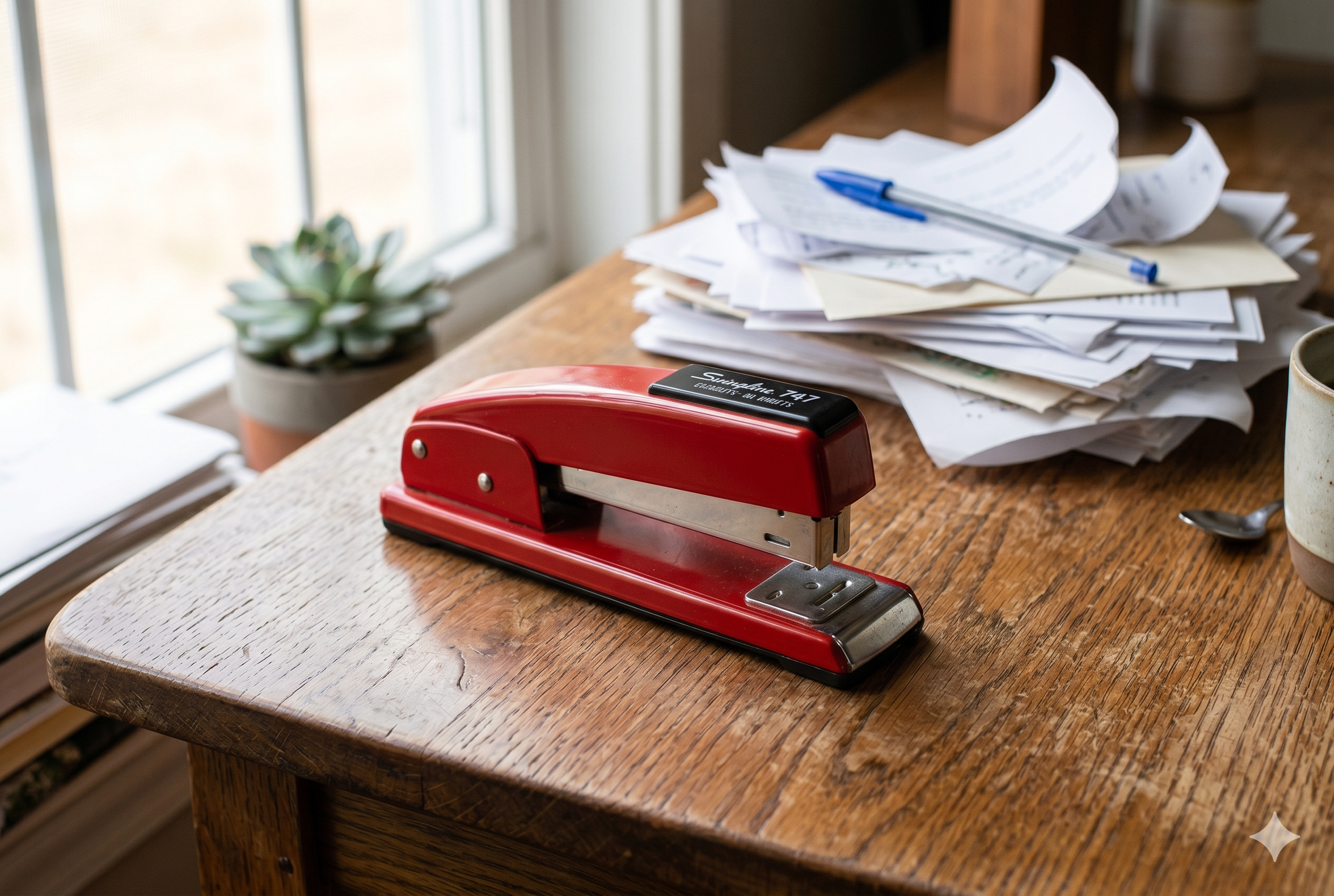
Sometime in the months that followed, I was sitting across the table from my therapist, Dr. Susan Barngrover. Mid-conversation, she reached behind her and grabbed a stapler off her messy desk, and set it down between us.
"How would you describe this?" she asked.
I looked at it for a second. "It's red and shiny. There's a black rubber foot on the bottom with ridges. The staples are sharp."
She nodded, then described it back to me. "It's a device that fastens paper together using metal staples driven by a spring mechanism."
That was the whole exercise. She wasn't telling me one of us was right. She was showing me that two people can sit at the same table, look at the same thing, and notice completely different parts of it.
That conversation reframed a lot for me. The way I had been moving through the world wasn't strange. I was someone who took in a room the way I had taken in that stapler. Color, texture, light, smell, the energy of the people in it. I had always assumed everyone else was doing the same thing. They aren't. Some people experience a room primarily by function. What is this for, what is being decided. Others experience it primarily by feel.
Neither way is more right. But if you lead people, build organizations, design experiences, or hold hard conversations, it matters to know that both kinds of people are sitting at your table.
I was at MOCSA's new building last week. It's still under construction, so I won't pretend I had a full reaction to a finished space. What I did notice was that everywhere I looked, someone was making a decision with feel in mind. Privacy film on the windows. Sound barriers in the walls. A sensory room for kids. Natural light pulled into spaces that could have been windowless. None of those choices changes the services MOCSA provides. All of them change what it will be like to walk in the door on the hardest day of your life. Someone with leadership authority decided that was worth designing for on purpose.
That's the call I'd love more leaders to make.
If you lead a team, run an organization, or even hold a family together, you're constantly making choices that other people experience before they ever process the actual words. The room you put a hard conversation in. The tone of the email. The way you close a door. The pause before you answer a question. Whether the person across from you feels watched or held.
There's an old adage that people won't remember what you say, but they will remember how you made them feel. I've come to think that's true in both directions. I remember Susan's kindness more than her words. I remember the cold of the interrogation room more than the conversation. I remember John's office because of the safety, not the specifics. And I'll remember this season with my kids in a thousand small textures that don't fit in a calendar entry.
Not everyone reads a room the way I do. But every room is being read by somebody. The more we notice that, the better we lead.
Jessi Bixler is an entrepreneur, marketing strategist, and the author of The Story We Share (Next Thing Press, 2025), a memoir about the ripple effects of sexual assault through a family and the systems that respond to harm. She speaks to leadership audiences and advocacy organizations on what people carry and how it shapes how we lead.
Get the book | Subscribe to the newsletter | Book Jessi to speak